


Under Eye Filler vs Blepharoplasty: Which Treatment Is Right for You?
Under eye filler uses injections to restore volume; blepharoplasty uses surgery to remove excess tissue and tighten skin. Filler shows immediate results with no downtime; surgery takes weeks to heal and delivers permanent correction.
Both approaches can refresh tired-looking eyes. They address different concerns and suit different timelines. Here’s how to decide which matches your goals.
What’s the Difference Between Under Eye Filler and Blepharoplasty?
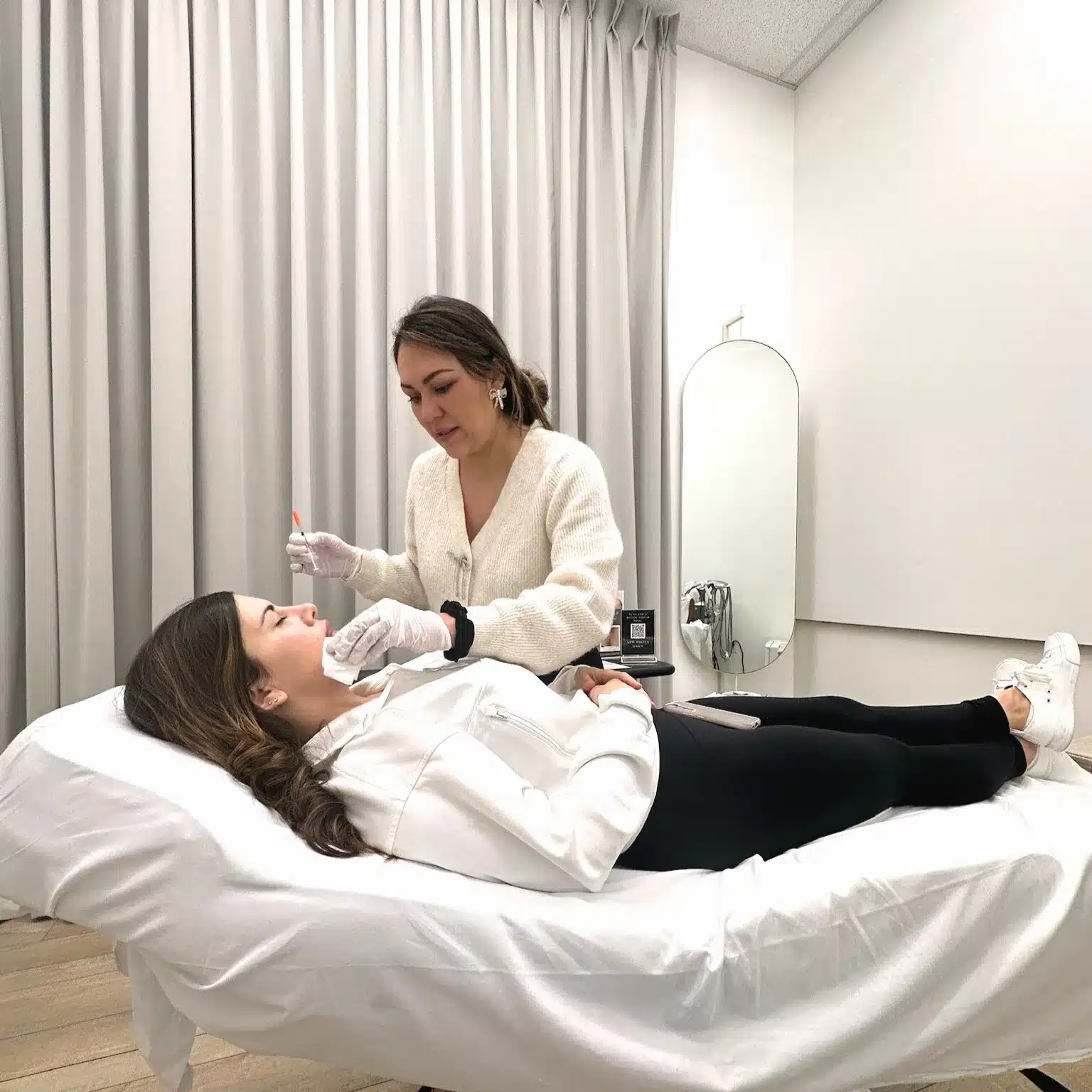
Under eye filler uses injectable hyaluronic acid (HA) to fill the tear trough, the hollow that runs from the inner corner of your eye toward your cheek. We place the filler beneath the surface to smooth the transition between your lower lid and cheek, reducing shadowing and the appearance of dark circles. The treatment takes 15–20 minutes, and you’ll see results immediately. Most patients return every 9–12 months for maintenance.
Blepharoplasty (eyelid surgery) removes or repositions fat and trims excess skin through incisions along the lower lash line. A surgeon tightens the area and addresses sagging that filler can’t fix. Recovery involves swelling and bruising for about two weeks. Results are permanent, though natural aging continues.
At SLK Clinic, we see patients choose under eye filler nashville when volume loss is the main issue and downtime isn’t an option. Surgery makes sense when you have significant skin laxity or fat pads that no amount of filler will correct.
| Factor | Under Eye Filler | Blepharoplasty |
|---|---|---|
| Method | Injectable hyaluronic acid | Surgical incision, fat removal/repositioning, skin excision |
| Downtime | None; mild swelling for 1–2 days | 7–14 days; stitches removed after one week |
| Results | Immediate | Visible after swelling subsides (2–4 weeks) |
| Duration | 9–12 months | Permanent (aging continues) |
| Anesthesia | Topical numbing cream | Local with sedation or general |
| Cost | $600–$1,200 per session | $3,000–$7,000 (one-time) |
| Best For | Tear trough hollowing and volume-related dark circles | Excess skin, under-eye bags, significant fat prolapse |
| Risks | Bruising, swelling, rare vascular occlusion | Infection, scarring, asymmetry, prolonged swelling |
When Filler Works and When It Doesn’t
Filler excels at replacing lost volume. Volume deficits respond to filler: gently press your lower lid, and if the hollow disappears, that’s your sign. It’s also effective for patients in their 20s through 40s whose skin still has elasticity.
Filler won’t tighten loose skin or remove true under-eye bags (fat pads that bulge forward). Adding volume over a bulge typically increases fullness rather than smoothness. Crepe-paper wrinkling and bags that persist when lying down signal that surgery may be more effective than filler alone.
We often pair under eye filler nashville with Botox nashville for crow’s feet or with microneedling nashville to improve skin texture. That combination addresses volume and surface texture without a scalpel.
Downtime and Recovery: The Practical Difference
Most of our Nashville and Chattanooga patients choose filler because they can’t take a week off. You’ll leave the appointment with results you can see, though minor swelling or a small bruise may last a day or two. We schedule treatments on a Friday so any puffiness resolves by Monday.
Blepharoplasty requires planning. Expect two weeks before you’re comfortable in public without sunglasses. Stitches come out after five to seven days, though bruising can linger. If you work from home or have flexible time, the recovery is manageable. If you’re on camera or in client meetings daily, the downtime is real.
Cost Over Time
Filler has lower per-session costs ($600–$1,200 per syringe, typically one to two syringes) and requires annual maintenance—roughly $6,000–$12,000 over a decade. Blepharoplasty costs $3,000–$7,000 upfront as a one-time expense.
If you’re in your 30s or 40s and expect to need correction for decades, the math favors surgery. If you’re addressing early volume loss and want the flexibility to adjust or stop, filler makes sense.
Which Treatment Fits Your Goals?
The right treatment depends on what you’re trying to fix:
Choose under eye filler if you have:
- Tear trough hollowing or shadowing
- Good skin elasticity (minimal crepiness)
- No significant under-eye bags
- A schedule that doesn’t allow downtime
- A preference for gradual, reversible results
Choose blepharoplasty if you have:
- Excess, sagging skin on the lower lid
- Fat pads that create permanent puffiness
- Deep wrinkles that filler won’t smooth
- Time for a two-week recovery
- A preference for a one-time, permanent solution
Many patients start with filler and move to surgery years later as skin laxity increases. There’s no rule that says you must pick one forever.
How We Approach Under Eye Rejuvenation at SLK
We evaluate your anatomy before recommending a treatment. During your consultation, we’ll ask you to look up, look down, and lie back so we can see how your under-eye area changes with position and movement. That tells us whether volume loss or fat distribution is the primary issue.
For filler-appropriate cases, we use a cannula (a blunt-tip needle) to place hyaluronic acid along the tear trough, minimizing bruising and discomfort. We add product in small increments and check symmetry as we go. The appointment takes about 20 minutes, and you’ll walk out with smoother contours. For surgery candidates, we refer to a board-certified oculoplastic surgeon and coordinate complementary treatments like midface dermal fillers nashville or skin resurfacing once you’ve healed.
Book a consultation at our Nashville or Chattanooga location to discover which treatment fits your eyes and timeline. Schedule your under eye filler consultation today.
