

Most dermal filler side effects are mild and resolve within days. Bruising, swelling, and tenderness at injection sites are the most common reactions, affecting roughly 50–70% of patients in the first 48 hours. Serious complications like vascular occlusion are rare (less than 0.1% when fillers are placed by trained injectors), but knowing what to watch for helps you respond quickly if something feels off.
At SLK Clinic, we walk every patient through consultation and treatment. Understanding the difference between normal healing and a true problem makes the experience less stressful and helps you get the results you’re after. If you’re weighing your options, our types of lip filler guide breaks down how different products behave in tissue.
What Are the Most Common Side Effects of Dermal Fillers?
Temporary reactions happen because you’re introducing a gel into tissue. The body responds with inflammation, and the needle itself can nick small blood vessels. Here’s what we see most often:
Bruising and swelling. These show up within hours and peak around day two. Lips and under-eye areas bruise more easily because the skin is thinner and blood vessels are closer to the surface. Ice packs in the first 24 hours and arnica (topical or oral) can shorten the bruising window by a day or two.
Tenderness and firmness. The injection site may feel sore when you touch it, and hyaluronic acid fillers often feel firm for the first few days as the gel settles. Temporary firmness as the gel settles is normal and resolves within days; persistent hardness beyond two weeks signals a possible granuloma requiring evaluation.
Redness. Mild pinkness around the injection points is normal and usually fades within 24 hours. If it spreads or gets warmer, contact your injector.
Asymmetry. Swelling can make one side look different from the other right after treatment. Wait a week before judging symmetry; most imbalances resolve as inflammation drops. If you’re exploring dermal fillers in Nashville or lip filler in Chattanooga, ask your provider about their touch-up policy for persistent asymmetry.
Tyndall effect. This bluish tint happens when filler is placed too close to the skin surface, especially under the eyes. Hyaluronidase (an enzyme that dissolves hyaluronic acid) can reverse it quickly. It’s one reason injector skill matters (knowing the right depth and product for each zone prevents this outcome).
How Long Do Filler Side Effects Last?
Most reactions follow a predictable timeline. Swelling peaks at 24–48 hours and drops by 70–80% within three to five days. While bruising shifts from purple to yellow-green over one to two weeks, tenderness typically clears in three to seven days.
Palpable lumps you can feel but not see are common in the first week—usually just pockets of filler awaiting full tissue integration. Gentle massage (if your injector recommends it) can help them smooth out. Visible lumps persisting beyond two weeks indicate possible granulomas or displaced product requiring professional assessment.
Delayed reactions (swelling or firmness that appears weeks or months later) are less common but can happen. They’re often triggered by illness or an immune response. Hyaluronic acid fillers can be dissolved with hyaluronidase; longer-lasting fillers like Sculptra or Radiesse may require steroid injections or time to resolve.
What Are the Serious Side Effects, and When Should I Worry?
Vascular occlusion is the side effect every injector is trained to avoid and recognize. It happens when filler blocks a blood vessel, cutting off blood flow to tissue. The skin blanches white, then turns dusky or mottled, while pain shifts from a sharp, immediate spike—distinct from normal post-injection soreness.
If you notice blanching, severe pain, vision changes, or skin that looks patchy or dark after filler, contact your injector immediately. Vascular occlusion is a medical urgency. Treatment involves dissolving the filler with hyaluronidase and restoring blood flow as quickly as possible. Most practices keep hyaluronidase on hand for this reason.
Infection is rare when sterile technique is followed, but it can happen. Signs include increasing redness and swelling that gets worse after day three. Bacterial infections respond to antibiotics; biofilm infections (bacteria that coat the filler) may require dissolving the product.
Allergic reactions to hyaluronic acid are extremely uncommon because HA is bioidentical to a substance already in your skin. Reactions to lidocaine (the numbing agent mixed into many fillers) are more common but still rare. Symptoms include hives or swelling beyond the injection site.
Granulomas (firm nodules that form around filler) can appear weeks to years later. They’re the body’s attempt to wall off a foreign substance. Treatment depends on the filler type and may include steroids, dissolving enzymes, or removal.
How Can I Reduce the Risk of Side Effects?
Choosing an experienced injector is the single biggest factor. We’ve placed thousands of syringes at our Nashville and Chattanooga locations, and that repetition builds the anatomical knowledge and motor control that prevent complications. Ask about your provider’s training and whether they stock hyaluronidase.
Before your appointment, avoid blood thinners if medically safe. That means no aspirin or fish oil for 3–5 days prior. Alcohol thins blood, too (skip it for 24 hours before treatment). Arnica supplements started two days early may reduce bruising, though the evidence is mixed.
Tell your injector about any history of cold sores. Filler around the mouth can trigger a breakout, and antiviral medication taken before treatment prevents it.
After treatment, keep your head elevated for the first night to minimize swelling. Ice on-and-off for the first few hours helps, but don’t press hard (firm pressure can shift filler). Avoid intense exercise and alcohol for 24 hours; they both increase blood flow and can worsen bruising.
Don’t massage the area unless your injector tells you to. Some zones (lips, cheeks) benefit from gentle shaping in the first day or two; others (tear troughs, temples) should be left alone. Follow your provider’s specific aftercare instructions based on the product used and the injection depth.
If you’re researching under eye filler in Nashville, know that this zone has a higher rate of visible swelling and Tyndall effect because the skin is so thin. An injector who uses a cannula (a blunt-tip needle) and places product on bone rather than in the skin has better outcomes.
Frequently Asked Questions
How long does swelling last after dermal fillers?
Swelling peaks at 24–48 hours and drops significantly by day five. Lips and under-eye areas may stay slightly puffy for up to two weeks. If swelling increases after day three or doesn’t improve by day seven, contact your injector.
Are dermal filler side effects serious?
Most side effects are mild and temporary. Serious complications like vascular occlusion or infection occur in less than 1% of treatments and are manageable when caught early. Choosing a trained injector who understands facial anatomy lowers your risk substantially.
What can I do to prevent bruising from fillers?
Avoid aspirin and fish oil for 3–5 days before treatment. Arnica supplements or topical arnica gel may help. Ice immediately after injections and keep your head elevated for the first 24 hours. Some bruising is still possible even with all precautions.
Should I massage filler bumps?
Only if your injector tells you to. Some areas benefit from gentle massage in the first 48 hours to smooth product; others should not be touched. Massaging too hard or in the wrong zone can shift filler out of place or cause more swelling.
When should I call my injector after filler?
Call immediately if you see blanching (white skin), severe pain, vision changes, skin that turns dark or mottled, or swelling that worsens after day three. Also reach out if you develop fever, pus, or warmth that spreads (these can signal infection).
What to Expect at Your Filler Appointment
We start every session with a consultation to review your goals and medical history. That’s when we’ll flag anything that might increase bruising or swelling and adjust the plan if needed.
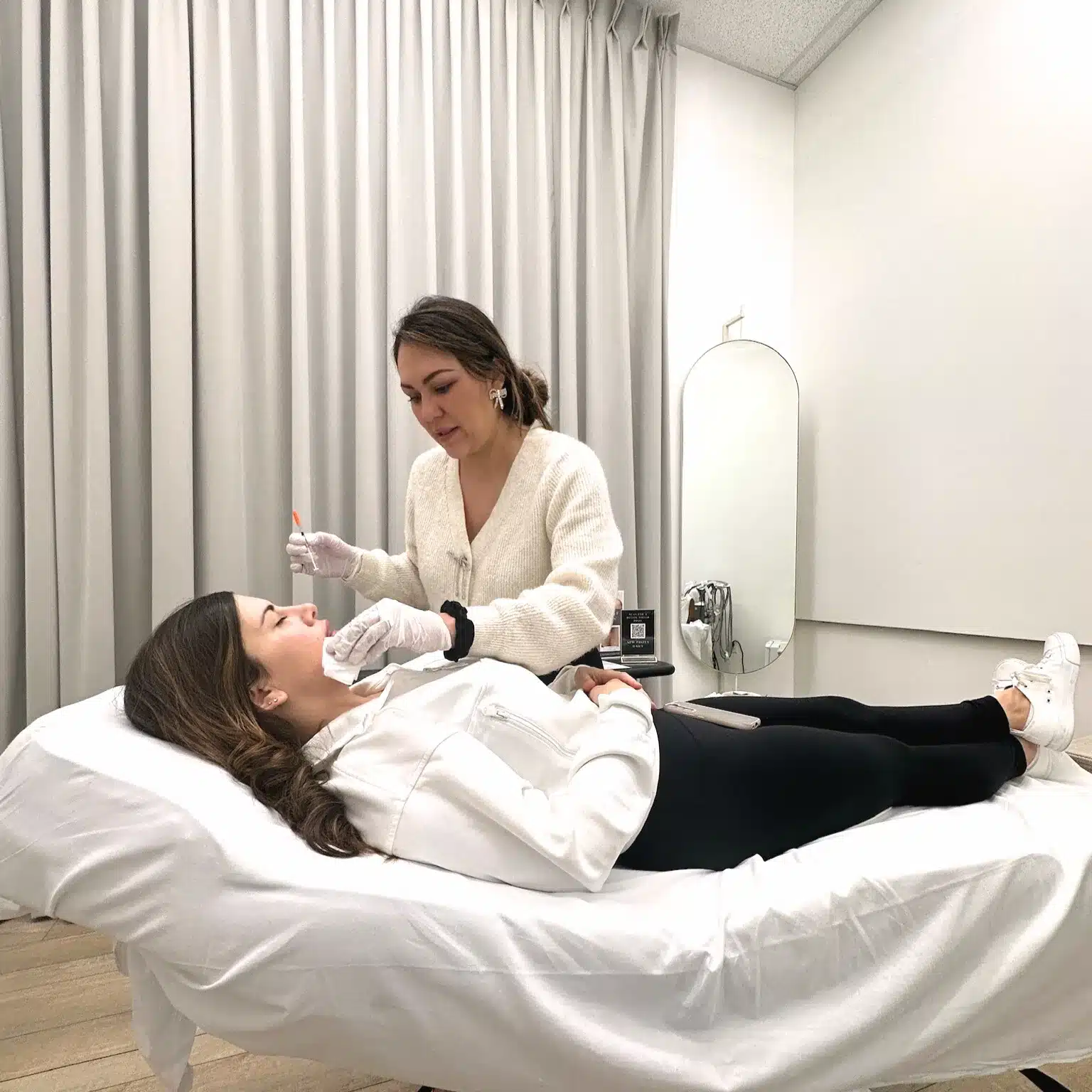
During treatment, we use a topical numbing cream and ice to keep you comfortable. Most fillers also contain lidocaine, so any initial pinch fades within seconds. We inject slowly, pausing to check symmetry and feel for resistance that might signal a vessel.
Afterward, you’ll leave with an ice pack and written aftercare instructions. We schedule a two-week follow-up (in person or via photo) to assess the result and address any concerns. If a small adjustment is needed, we handle it then; most of our patients are happy at that check-in, but we keep product on hand just in case.
Ready to move forward? Our types of lip filler guide walks you through product options, or schedule a consultation at our Nashville or Chattanooga locations.