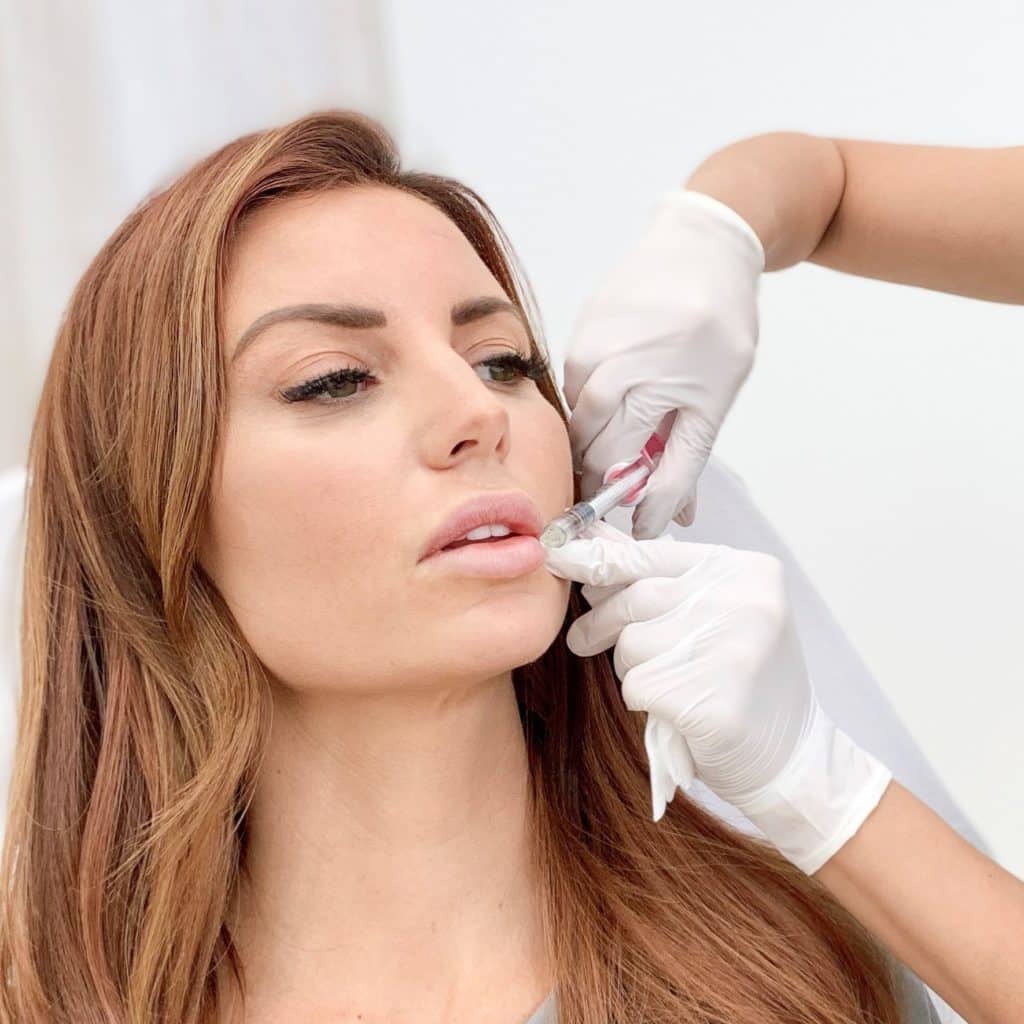

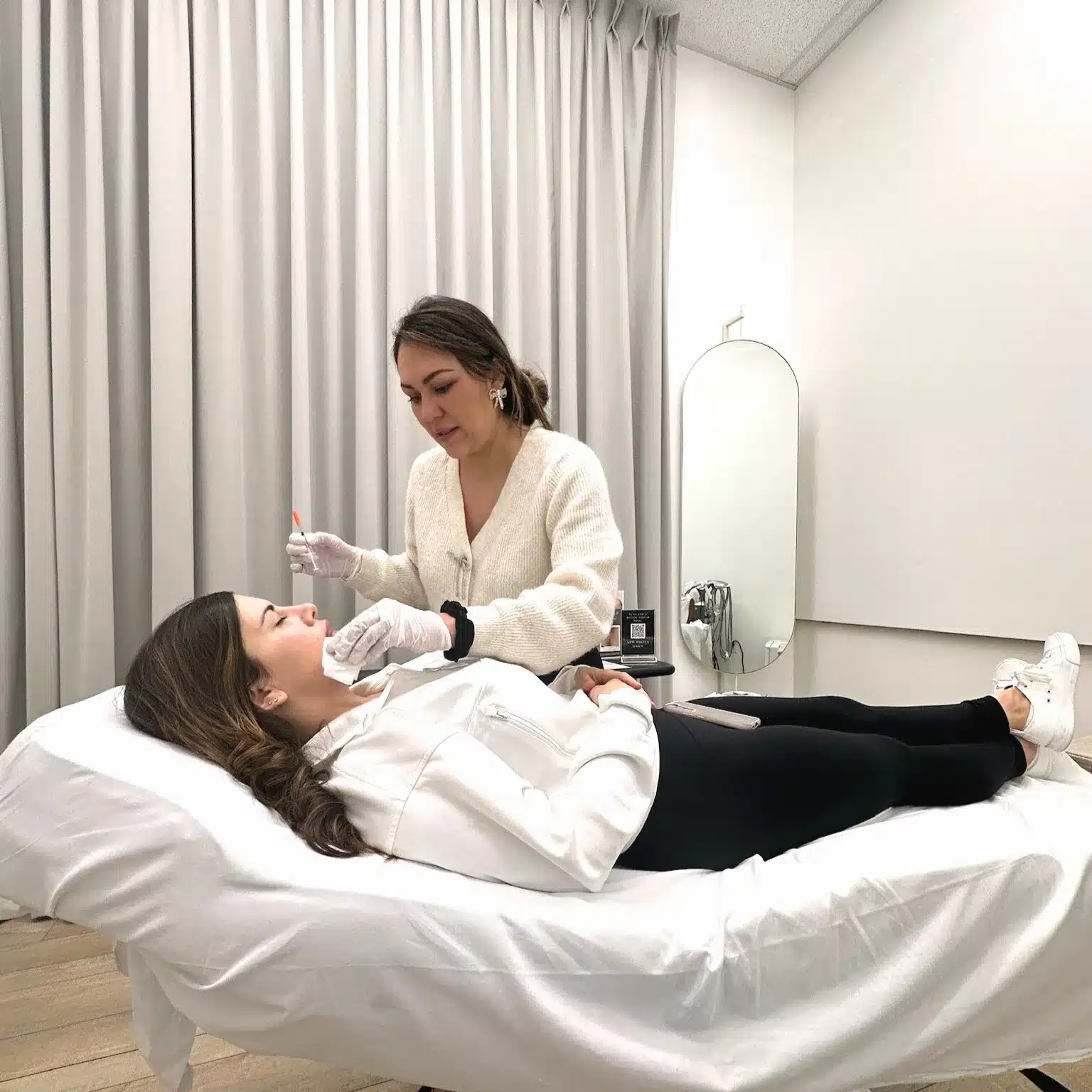

Both Restylane and Juvéderm are hyaluronic acid fillers proven for lip augmentation. Restylane uses a granular approach for shape retention, while Juvéderm spreads smoothly for added volume. Most patients see 6–12 months of results depending on the specific product and metabolism.
At SLK Clinic, we carry both lines and match the filler to your lip anatomy during a free consultation. Whether you’re considering lip filler near me in Nashville or Chattanooga, understanding these differences helps you make an informed choice.
What are the main differences between Restylane and Juvéderm?
Restylane and Juvéderm are both made from hyaluronic acid, a molecule naturally present in skin that attracts water. The key difference lies in how each brand cross-links and stabilizes that HA.
Restylane uses a granular, particle-based gel that gives it more firmness and makes it easier to control during injection. Many injectors prefer this for defining borders like the vermilion or cupid’s bow. Because the gel is less cohesive, it integrates slowly and holds its shape rather than spreading laterally.
Juvéderm uses Vycross technology to cross-link high- and low-molecular-weight HA into a smooth, cohesive gel. This spreads more evenly through tissue, which works well for overall volume and a softer feel. It also resists breakdown slightly longer in some studies, though individual metabolism varies.
Both families include multiple formulas. Restylane Kysse and Juvéderm Volbella are designed specifically for lips, with lower G-prime (gel stiffness) than the versions used in cheeks or jawline.
Which filler lasts longer in the lips?
Juvéderm formulas generally last 9–12 months in lips, while Restylane products average 6–9 months. The difference comes from Juvéderm’s denser cross-linking, which slows enzymatic breakdown.
That said, longevity depends on the specific product. Juvéderm Volbella XC is labeled for 12 months, and many patients stretch it longer with touch-ups. Restylane Kysse lasts around 6 months on average, though some see results fade closer to 5 months if they have fast metabolism or exercise heavily.
Movement also matters. Lips are one of the most active areas of the face, so all fillers break down faster there than in static zones like the cheeks. Smoking, sun exposure, and metabolism all shorten filler life regardless of brand.
| Feature | Restylane (Kysse) | Juvéderm (Volbella) | |
|---|---|---|---|
| Formulation | Granular HA gel | Smooth Vycross gel | |
| Texture | Firmer, more structure | Softer, cohesive | |
| Longevity | 6–9 months | 9–12 months | |
| Cost per syringe | $650–750 | $700–800 | |
| Best for | Definition, borders | Volume, smoothness |
Does one feel more natural than the other?
After injection, Juvéderm typically feels softer, whereas Restylane may feel firmer for several days. Both soften as swelling resolves and the product integrates, usually within a week.
The “natural” feel depends more on volume and placement than brand. Overfilling with either product creates stiffness and an unnatural look. Underfilling by 10–20% and building over two sessions often delivers better long-term satisfaction.
Restylane advocates cite better control and reduced overfill risk because the gel doesn’t migrate as easily. Juvéderm enthusiasts value its immediate smoothness and extended intervals between appointments.
At SLK Clinic, we assess your lip anatomy and desired outcome before recommending a product. We also layer different viscosities (firmer filler in the border, softer filler in the body) to mimic natural lip structure.
Which costs more, and does price reflect quality?
Juvéderm typically costs $50–100 more per syringe than Restylane, reflecting the Vycross technology and slightly longer duration. In Nashville and Chattanooga, expect to pay $650–750 for Restylane Kysse and $700–800 for Juvéderm Volbella.
Technique and anatomical knowledge matter more than brand choice. Restylane and Juvéderm can both deliver comparable results in experienced hands.
Some practices discount older-generation fillers (like original Juvéderm Ultra or Restylane-L) to move inventory. These work fine but lack the refinements of newer formulas like Volbella and Kysse, which were engineered specifically for lip tissue.
If cost is a deciding factor, ask whether the injector offers a loyalty program or package pricing. At SLK, we provide pricing transparency during your consultation and never upsell beyond what your anatomy supports.
Can you switch between Restylane and Juvéderm?
Yes. Both are hyaluronic acid fillers, so they’re fully compatible. If you had Restylane six months ago and want to try Juvéderm next, there’s no medical reason to wait for complete dissolution.
Some injectors prefer to dissolve existing filler with hyaluronidase before switching, especially if you’re unhappy with the current result or if significant product remains. That enzyme works on all HA fillers regardless of brand.
Switching isn’t always necessary. If you liked your Restylane result but want to extend the interval between appointments, trying Juvéderm for the next session makes sense. If you preferred more structure and less spread, stay with Restylane.
We also see patients who use one brand for lips and another for other areas. For example, Restylane Kysse in the lips and Juvéderm Voluma in the cheeks. The choice is anatomical, not dogmatic.
How do injectors choose between the two?
Injectors base the decision on patient goals and lip anatomy. Thinner lips may benefit from Juvéderm’s smooth spread. Lips with fullness that need border definition favor Restylane’s structure.
Skin ethnicity also plays a role. Patients with thicker skin may not notice texture differences between the two, while those with thin, pale skin sometimes see or feel Restylane particles if placed too superficially. Proper depth and massage technique eliminate most of that risk.
Some injectors train extensively with one brand and stick with it for consistency. Others keep both on hand and choose per case. At SLK Clinic, we stock multiple products within each line so we’re not locked into a single option.
For lip augmentation in Nashville or lip filler in Chattanooga, we walk you through the pros and cons during your free consultation, then make a recommendation based on what we see and what you describe.
Are there any safety differences?
Both Restylane and Juvéderm have equivalent safety profiles. Serious complications (vascular occlusion, infection, granuloma formation) are rare with either brand and almost always trace back to technique rather than product.
Allergic reactions to HA are extremely uncommon because the molecule is bioidentical to what your body produces. Most “allergic” responses are actually inflammatory reactions to lidocaine (the local anesthetic mixed into the filler) or bacterial contamination, neither of which is brand-specific.
Swelling and tenderness occur equally with both. Juvéderm’s smooth gel may cause slightly more initial swelling because it draws more water immediately, but the difference resolves within 48 hours.
The FDA has approved both for lip augmentation in adults over 21. Neither is recommended during pregnancy or breastfeeding, not because of known harm but due to lack of data.
Schedule your lip filler consultation
Ready to find your ideal lip filler match? We’ll assess your lips, discuss your desired look, and recommend the filler that fits, whether that’s Restylane Kysse or Juvéderm Volbella.
SLK Clinic offers free consultations at both our Nashville and Chattanooga locations. We’ll answer your questions, show you before-and-after examples, and build a treatment plan that works for your timeline and budget. Lip filler near me – book your consultation today.