



A tube of freshly centrifuged PRP.
PRP FROM 2010-2020
Although microneedling with PRP (also known as the “vampire facial“) is a relatively new therapy, the utilization of PRP in other fields of medicine such as dentistry, orthopedics, and reconstructive surgery has been increasing dramatically over the past couple of decades. PRP’s regenerative properties are now widely accepted among researchers, doctors, and nurses. Providers can now even use it to produce new hair! So what can this powerful substance do for your skin? Over the past 10 years, dermatology researchers have discovered that PRP is quite promising in regenerating skin that has been damaged through scarring, age, or UV damage.
WHAT IS PRP?
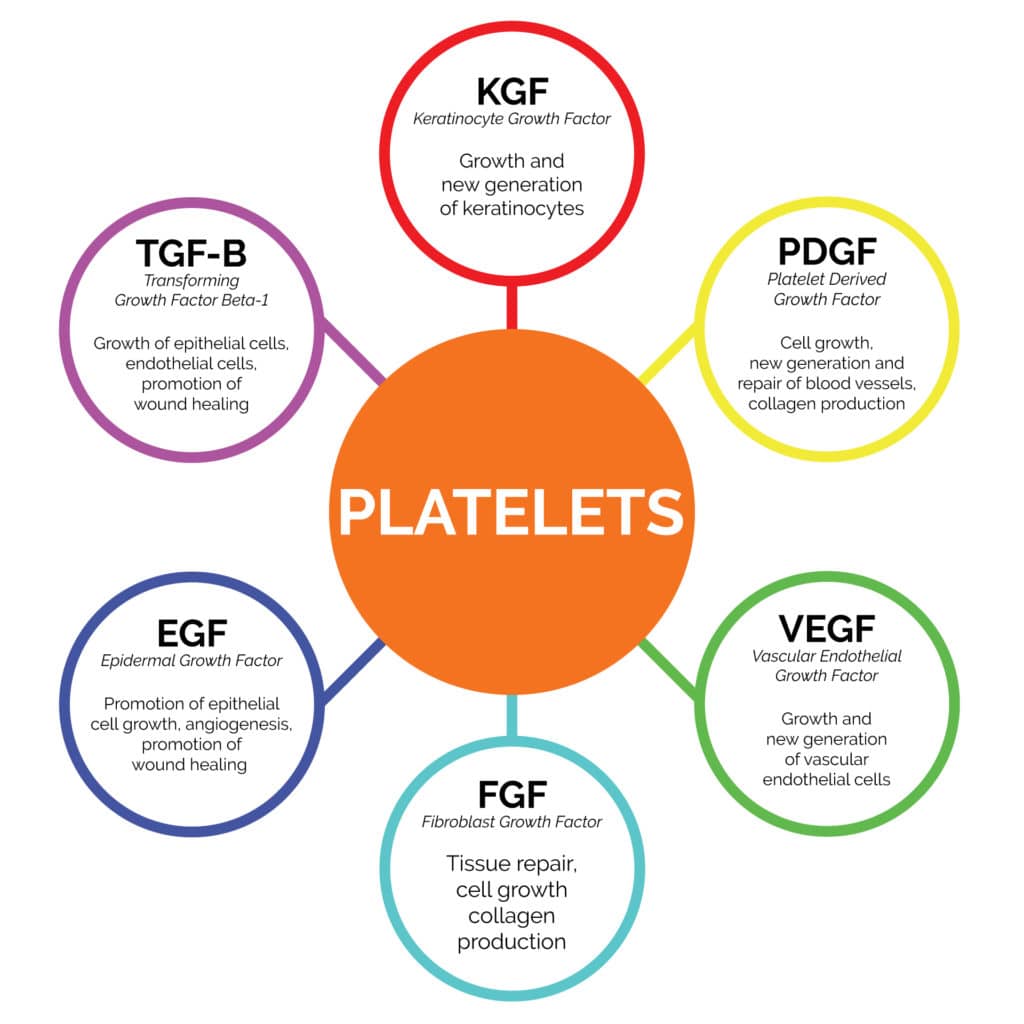
For those who aren’t familiar, PRP (platelet-rich plasma) consists of a patient’s own blood plasma that has been enriched by concentrating the number of platelets so it exceeds normal blood levels. Concentrating the plasma is desirable because plasma contains various growth factors that are instrumental in repairing skin. These growth factors include platelet‐derived growth factor (PDGF), transforming growth factor (TFG), vascular endothelial growth factor (VEGF), and insulin‐like growth factor (IGF). PRP growth factors stimulate tissue remodeling and when they are concentrated, they are associated with enhanced healing, upregulation of collagen synthesis, and promotion of tissue regeneration.
The growth factors contained in PRP and their respective roles in the body.
WHAT HAPPENS WHEN YOU COMBINE MICRONEEDLING WITH PRP?
The increased growth factor activity associated with PRP is believed to multiply the effects of microneedling to promote aesthetically-superior tissue remodeling. In other words, PRP with microneedling makes the skin more young and beautiful than microneedling alone. The synergistic effects of microneedling with PRP offers unique results. Studies show that combining microneedling and PRP in the same appointment produces thicker epidermis and more developed rete ridges, compared to PRP alone or microneedling alone. PRP combined with microneedling also achieves greater patient satisfaction scores compared to microneedling alone. It is well documented that PRP combined with microneedling produces superior benefits for depressed acne scars than microneedling alone.
Rete ridges in the upper layer of the skin. What are rete ridges, you ask? Rete ridges are crucial structures in the skin that promote epidermal proliferation and provide a natural, specialized environment for our skin’s stem cells. Damaged or scarred skin lacks rete ridges.

INJECTING PRP WITH MICRONEEDLING INCREASES ELASTICITY
We also know from clinical studies that when injected (also known as the “vampire facelift“, PRP can nearly double skin’s elasticity. Why is this important? In photoaged skin, the skin’s network of elastic fibers has become destroyed. Elastin becomes thickened, tangled, crooked, degraded, and dysfunctional, resulting in elastosis, which is characterized by deep wrinkles, laxity, yellowing, and tough skin. To build elasticity, 3 injections of PRP are needed spaced 1 month apart.
PRP DECREASES DOWNTIME
For those patients concerned with downtime, PRP also accelerates healing following microneedling. In particular, it reduces redness and edema (swelling) a couple days earlier, which is a true testament to the regenerative power of platelet-enriched plasma. Since the application of PRP in dermatology is so new, it is likely we do not know yet all the benefits of applying PRP during microneedling.
WHAT ELSE DO I NEED TO KNOW ABOUT PRP AND MICRONEEDLING?
Although the concept of PRP sounds simple (people get their blood drawn all the time, right?), how PRP is prepared can determine how much of a result you can see. To learn more about how SLK believes is the best way to prepare and purify PRP, read more here.


